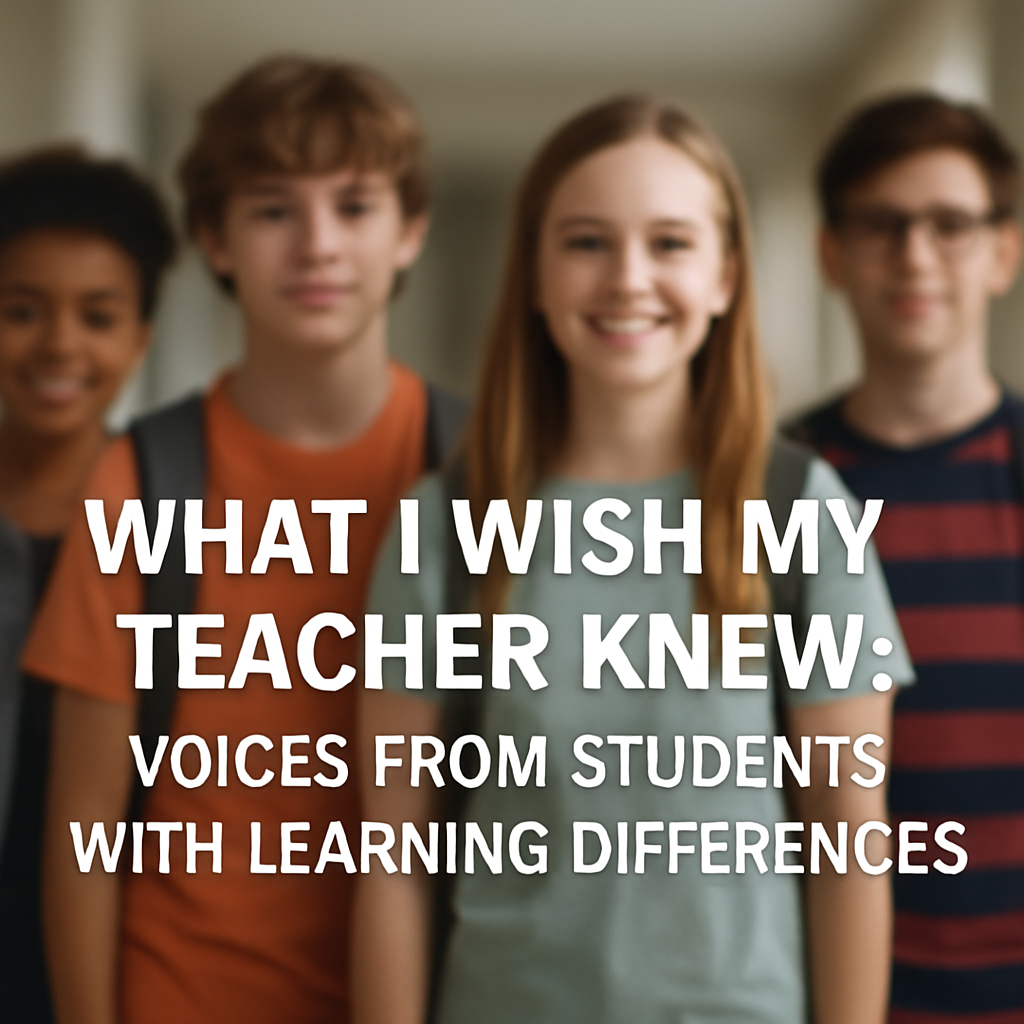
First-Person Reflections That Educate and Inspire
Students with learning differences often navigate a school system that isn’t built for how their brains work. Many find themselves misunderstood, underestimated, or left out of conversations about their own education. But they have a lot to say—and their voices deserve to be heard.
In this article, we share first-person reflections from students with learning differences, offering insight into what they wish their teachers understood. These aren’t just stories of struggle—they’re stories of resilience, brilliance, and the power of being seen.
“I’m not lazy—I’m exhausted from trying to keep up.”
“Every day I come to school, I try my hardest. But when I read, the letters move. When I write, it takes me three times as long. I’m not making excuses. I just wish you knew how hard I’m working just to stay at the starting line.”
—Zoe, age 14, dyslexia
Many students with learning differences are constantly pushing themselves, but the effort isn’t always visible. What looks like procrastination or apathy may actually be fatigue, frustration, or fear of failure.
“My brain just works differently—not worse.”
“I’m really good at coming up with ideas. I can think of five ways to solve a problem in math. But when I try to write it down, my brain gets stuck. I wish teachers would see what I can do before they judge what I can’t.”
—Elias, age 11, dysgraphia and ADHD
These students often excel in creativity, problem-solving, and verbal expression—but may struggle with written output or memorization. Strength-based teaching can make all the difference.
“Extra time doesn’t give me an advantage. It gives me a chance.”
“When I get extended time on a test, people say it’s not fair. But I need more time just to read the questions and understand them. Without it, I can’t show what I know.”
—Camille, age 16, dyslexia
Accommodations aren’t shortcuts. They’re tools that allow students to access the curriculum in a way that matches how they process information.
“Please don’t compare me to my classmates.”
“When I hear, ‘Well, your brother never had trouble with this,’ it makes me feel like I’m failing. I’m not my brother. I’m me. I’m doing the best I can.”
—Julian, age 13, executive function challenges
Comparisons can erode self-esteem. Celebrate each student’s growth based on their own starting point, not someone else’s finish line.
“Let me be part of the conversation about my learning.”
“Sometimes people talk about my IEP in front of me like I’m not there. I want to be asked what helps me. I want to learn how to speak up for myself.”
—Nina, age 12, language processing disorder
Self-advocacy is a life skill. Including students in conversations about their learning builds confidence and ownership.
Final Thoughts from the Students:
-
“I wish my teacher knew I want to succeed just as much as everyone else.”
-
“Please talk to me with kindness, not frustration.”
-
“Thank you to the teachers who took time to learn how I learn.”
What Educators Can Do
-
Listen first. Ask students what’s working and what isn’t.
-
Focus on strengths. Build instruction around what a student can do.
-
Use inclusive practices. UDL, flexible seating, and multimodal assignments benefit everyone.
-
Check your assumptions. Learning differences don’t mean less intelligence or effort.
-
Empower students. Teach them to understand their learning profile and advocate for themselves.
Students with learning differences are not broken. They don’t need fixing—they need understanding, support, and opportunity. When teachers make space to listen, they often discover a student who is not only capable—but exceptional.
-
A Personal Profile Highlighting Creativity and Resilience
At first glance, Maya didn’t seem like someone who would grow up to love words. Diagnosed with dyslexia in second grade, she struggled to read aloud in class, stumbled over spelling tests, and avoided writing assignments whenever she could. For years, her relationship with language was defined by frustration. But today, Maya is a published poet, a spoken word performer, and a powerful advocate for students with learning differences.
Her journey is not just about overcoming a diagnosis—it’s about transforming it into a unique lens for creativity and self-expression.
A Difficult Start
“I used to think something was wrong with me,” Maya recalls. “Everyone else could read so fast. I always felt two steps behind.”
Even with supportive teachers and access to reading interventions, Maya spent much of elementary school feeling ashamed of her differences. Reading took tremendous effort. Writing was even harder—letters flipped, words disappeared, and sentences jumbled on the page.
But Maya’s mind was constantly buzzing with ideas. She was observant, imaginative, and deeply emotional. She just couldn’t get her thoughts down in the conventional way.
The Turning Point
Everything changed in ninth grade when Maya’s English teacher introduced the class to poetry. “She told us poetry didn’t have to follow rules. You could break lines, make up words, play with rhythm. It didn’t have to be perfect—it just had to be honest.”
Maya was fortunate to attend a school for students with learning differences.
For the first time, Maya didn’t feel boxed in by grammar or spelling. She began to write poems in her notebook, recording thoughts that had lived in her head for years. Her dyslexia, which made traditional writing difficult, gave her a natural sensitivity to rhythm and sound. “Because I struggled with reading, I learned to listen closely. I heard words differently. That made me a better poet.”
Finding Her Voice
Maya soon began performing her poems aloud, first in small groups, then at school assemblies, and finally at youth poetry slams across the city. Speaking her words gave her a sense of power she had never felt in the classroom.
“I don’t always feel confident on paper,” she says, “but when I speak, people really listen. They hear me.”
Her poems touch on everything from identity and self-worth to social justice and growing up with a learning difference. One of her most celebrated pieces, titled Backward Letters, is a moving meditation on dyslexia as both a challenge and a gift. The final line—I don’t see the world backwards; I see it differently—brings audiences to their feet.
The Bigger Message
Maya’s story is not an exception—it’s a reminder. Students with dyslexia and other learning differences often possess tremendous creativity, empathy, and insight. They just need the right outlets—and the right support.
Maya credits her teachers, her family, and a writing mentor at a local arts nonprofit with helping her build confidence and embrace her unique talents. “They didn’t try to fix me,” she says. “They helped me find my strength.”
Now in college, Maya leads a weekly poetry workshop for younger students with learning differences. She tells them what she once needed to hear: “Your brain isn’t broken. Your story matters. And your voice is powerful.”
Maya’s journey reminds us that success doesn’t always follow a straight line—and brilliance can be found in the spaces where traditional learning falls short. Through poetry, she discovered not just a way to write—but a way to be heard.
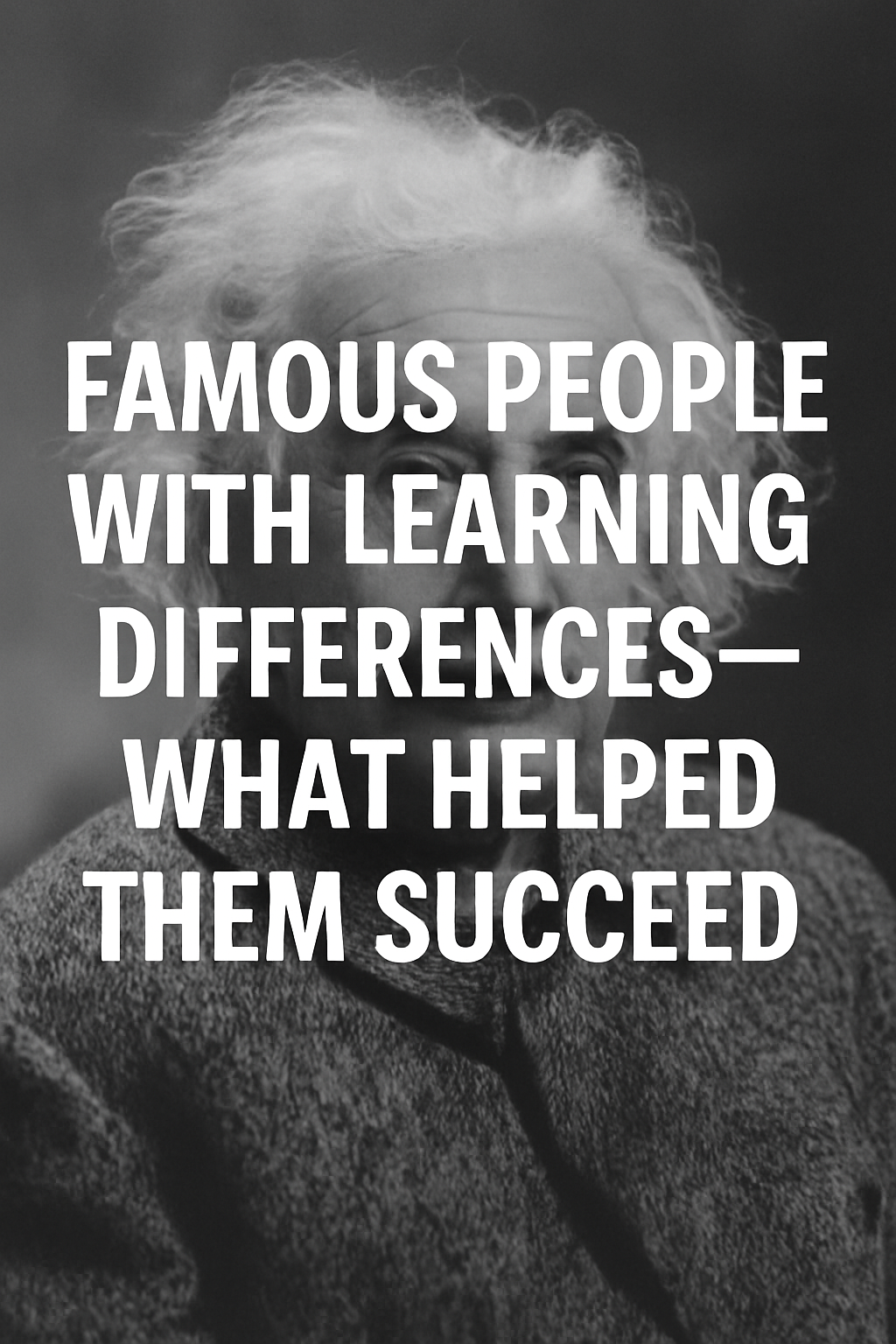
Real-World Role Models Who Prove There’s No One Right Way to Learn
Learning differences can feel isolating—especially in school environments that value speed, conformity, and conventional achievement. But the truth is, many of the world’s most successful people struggled with reading, writing, attention, or organization. What made the difference? In most cases, it wasn’t overcoming their learning differences—it was learning how to work with them.
Below are stories of high-achieving artists, scientists, entrepreneurs, and leaders who have learning differences—and who’ve used their unique strengths to shape the world. These stories can build confidence and remind students (and families) that success doesn’t come from being “typical”—it comes from being authentic.
Whoopi Goldberg – Dyslexia
The Oscar-winning actress and co-host of The View was called “slow” and “lazy” throughout her childhood. She struggled in school and didn’t learn she had dyslexia until adulthood. What helped her succeed? Creativity, confidence, and mentorship.
“The advantage of dyslexia is that my brain puts information together in a different way. I see things that other people don’t.”
Albert Einstein – Likely Dyslexia & Language Processing Difficulties
Though never formally diagnosed, many historians believe Einstein had learning differences. He didn’t speak fluently until age four and struggled with traditional schooling. His success came from deep curiosity, an ability to visualize complex concepts, and time to explore ideas at his own pace.
“Everybody is a genius. But if you judge a fish by its ability to climb a tree, it will live its whole life believing it is stupid.”
Cher – Dyslexia and Dyscalculia
Cher openly talks about her learning struggles, including difficulty reading and doing math. She says she barely graduated high school. But through perseverance and finding passion in music and performance, she turned challenges into fuel.
“I had all these dreams, but I didn’t think they could happen because school made me feel like I wasn’t smart.”
Richard Branson – Dyslexia and ADHD
The founder of Virgin Group struggled in school and dropped out at 16. Branson has said dyslexia helped him think differently, take creative risks, and lead with empathy.
“Being dyslexic made me simplify everything, which has been a huge advantage in business.”
Agatha Christie – Dysgraphia
The queen of mystery novels dictated all her books due to a lifelong difficulty with writing by hand. Dysgraphia made handwriting difficult—but her storytelling skills were unmatched. She dictated over 60 novels and short stories.
Lesson: Success doesn’t require mastering every skill—just finding ways to express your talent.
Octavia Butler – Dyslexia
The groundbreaking science fiction writer struggled in school but was determined to be a writer from a young age. She credits her success to persistence, a vivid imagination, and the quiet strength of writing at her own pace.
“I just knew there were stories I wanted to tell.”
Common Threads: What Helped Them Succeed
While every story is different, these role models share key factors that helped them thrive:
-
Strength-Based Support: They focused on what they were good at, not what they lacked.
-
Mentorship & Encouragement: Someone believed in them—even when others didn’t.
-
Creative or Alternative Expression: Many used art, speech, movement, or technology to bypass areas of difficulty.
-
Persistence & Self-Belief: They didn’t give up, even when traditional systems failed them.
Final Thoughts
Learning differences don’t close doors—they open different ones. These famous figures prove that success isn’t about fitting into a mold; it’s about discovering your own shape. For students who struggle, their stories send a powerful message: Your brain is not broken. It’s brilliant.
-

A Plain-Language Guide to Understanding Educational Rights
If your child has a learning difference or disability, you may have heard the term FAPE—but what does it actually mean, and why is it so important?
FAPE stands for Free Appropriate Public Education. It’s a legal right guaranteed under the Individuals with Disabilities Education Act (IDEA). In simple terms, it means that every child with a disability is entitled to a personalized education at no cost that helps them make meaningful progress in school.
But for many families, the definition of “appropriate” can feel vague—and that’s where the Supreme Court comes in.
What Is FAPE?
Under federal law, public schools must provide students with disabilities:
-
Special education and related services
-
Individualized instruction based on their unique needs
-
Services at no cost to the family
-
A program designed to help the child make progress—academically, socially, and functionally
FAPE doesn’t mean the best education possible. It doesn’t mean the same education as peers. It means an education that is reasonably calculated to help your child make appropriate progress based on their individual circumstances.
What Did the Supreme Court Say?
In a landmark 2017 case—Endrew F. v. Douglas County School District—the Supreme Court clarified what schools are required to provide under FAPE.
The Background:
Endrew, a student with autism, was not making meaningful progress in his public school, even though he had an IEP (Individualized Education Plan). His parents placed him in a private school where he improved significantly, and then they sued the district for reimbursement—arguing that the original IEP was not adequate.
The Decision:
The Supreme Court ruled in favor of Endrew and his family.
Key takeaway: A child’s IEP must be “reasonably calculated to enable a child to make progress appropriate in light of the child’s circumstances.”
This ruling raised the standard. It said schools can’t just provide minimal benefit or “some” progress. Instead, the education plan must aim for real, measurable, and meaningful progress based on the child’s needs.
What This Means for You
Here’s how the ruling impacts your child’s rights:
-
Your child is entitled to more than the bare minimum. Their IEP must aim for growth—not just stagnation.
-
Progress must be individualized. Schools must consider your child’s specific circumstances, not compare them to grade-level benchmarks or other students.
-
You can challenge inadequate services. If you feel your child’s IEP is not helping them progress, you have the right to request a review or even pursue mediation or legal action.
How to Advocate for FAPE
-
Know your rights. Learn what services your child is entitled to under IDEA.
-
Request data. Ask for measurable evidence of your child’s progress—or lack thereof.
-
Don’t accept vague language. Push for clarity in IEP goals: specific, trackable, and achievable.
-
Bring support to meetings. You have the right to bring an advocate, therapist, or expert to IEP meetings.
-
Speak up early. If your child isn’t making progress, don’t wait to voice concerns.
Final Thoughts
The Supreme Court ruling in Endrew F. affirmed something parents already know: every child deserves a real chance to grow, learn, and thrive. FAPE isn’t about perfection—it’s about possibility. And when families, schools, and educators work together with high expectations, students with learning differences can make meaningful progress that reflects their full potential.
-
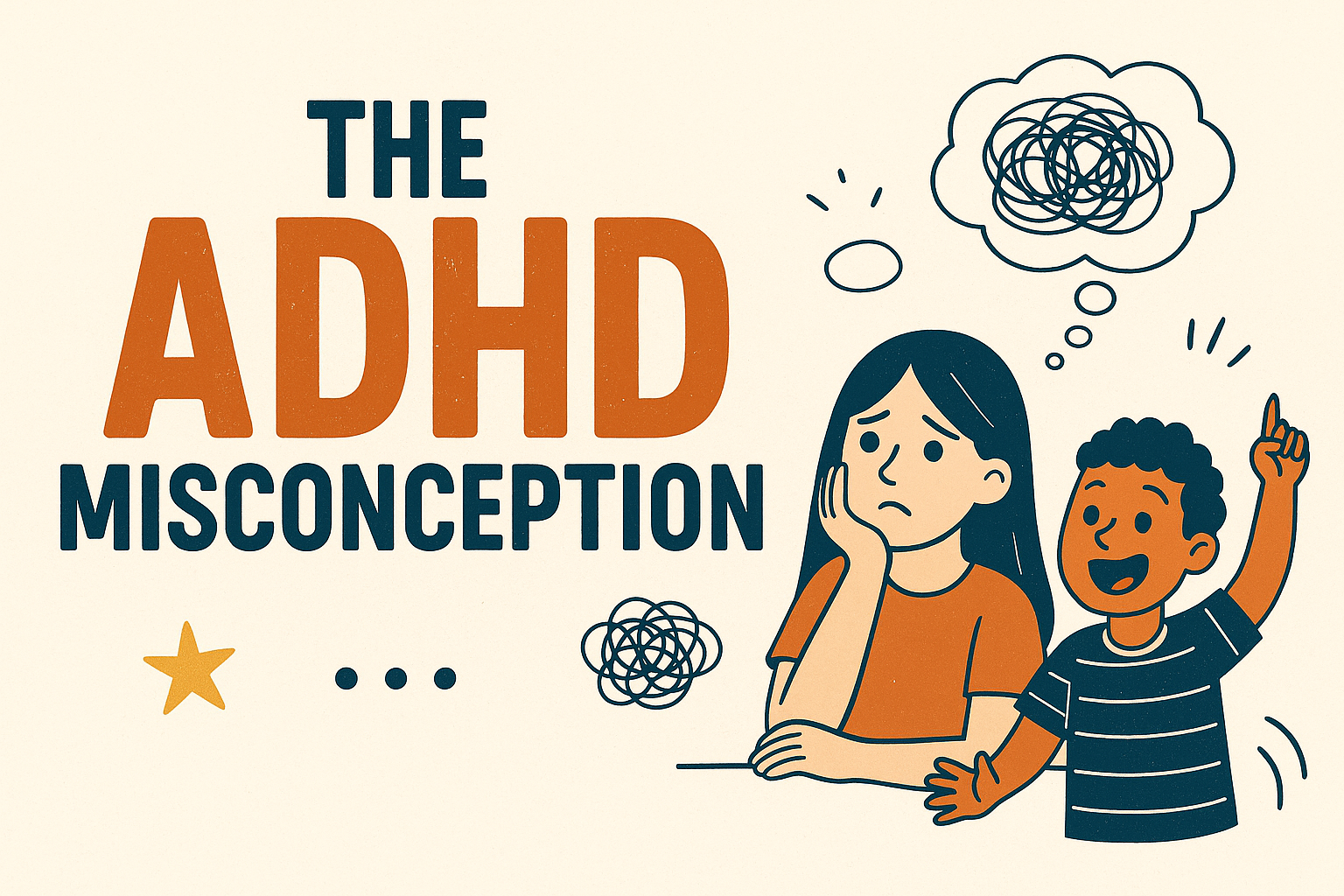
Helping Families and Educators Recognize the Full Picture
When most people hear the term ADHD—Attention-Deficit/Hyperactivity Disorder—they imagine a child bouncing off the walls, unable to sit still, blurting out answers, or fidgeting nonstop. But that image captures only part of the story. For many students, especially girls and those with inattentive-type ADHD, the signs are quieter, subtler, and more easily overlooked.
This misunderstanding leads to late diagnoses, missed support, and a lot of frustration for children who are told they’re lazy, spacey, or just not trying hard enough. The truth is, ADHD is not simply about being hyper. It’s about how the brain regulates attention, impulse control, and executive functioning—and that can look very different from one child to the next.
The Quiet Signs of ADHD
ADHD symptoms fall into two broad categories: inattentive and hyperactive-impulsive. Many kids exhibit a mix, but some lean heavily toward one. Here are lesser-known ways ADHD might show up:
-
Daydreaming: A student may appear “lost in their own world” during class but actually struggles to filter distractions or follow multi-step instructions.
-
Chronic disorganization: Backpacks overflowing with crumpled papers, missed deadlines, and forgotten assignments can stem from poor working memory and weak planning skills—not a lack of effort.
-
Avoidance of mentally taxing tasks: It’s not that they won’t start their homework—it’s that their brain has a harder time initiating tasks or sustaining focus.
-
Frequent mistakes in detail: Kids may skip problems, misread questions, or forget what they were doing mid-task, leading to lower grades despite high potential.
-
Emotional reactivity: Many children with ADHD have difficulty regulating emotions, leading to outbursts, sensitivity to criticism, or quick frustration.
Girls and the Missed Diagnoses
Girls are especially at risk of being underdiagnosed. Their ADHD symptoms often lean toward inattentiveness, and they may work extra hard to mask their difficulties. These students may be labeled “dreamy,” “shy,” or “anxious” rather than recognized as needing targeted support. As a result, girls often receive a diagnosis later—sometimes not until high school or even adulthood.
What Educators and Families Can Do
-
Look beyond behavior: A child who seems quiet and compliant may still be struggling internally. Pay attention to inconsistent performance, poor organization, or repeated forgetfulness.
-
Ask about effort vs. outcome: If a student is working hard but still falling short, executive functioning challenges could be at play.
-
Foster open conversations: Normalize talking about how different brains work. Kids with ADHD often feel shame or confusion about their challenges.
-
Seek a professional evaluation: Early identification is key. A comprehensive assessment can reveal underlying patterns and lead to more effective interventions.
Final Thoughts
The phrase “attention-deficit” is misleading. Children with ADHD often focus intensely—on the wrong thing, at the wrong time, or for too long. They don’t lack attention; they struggle to manage it.
Understanding this fuller picture helps create a more compassionate and responsive learning environment. It’s not about labeling kids—it’s about unlocking strategies to help them thrive.
Because when we expand our view of ADHD beyond hyperactivity, we open the door to recognizing—and supporting—many more children who need it.
-
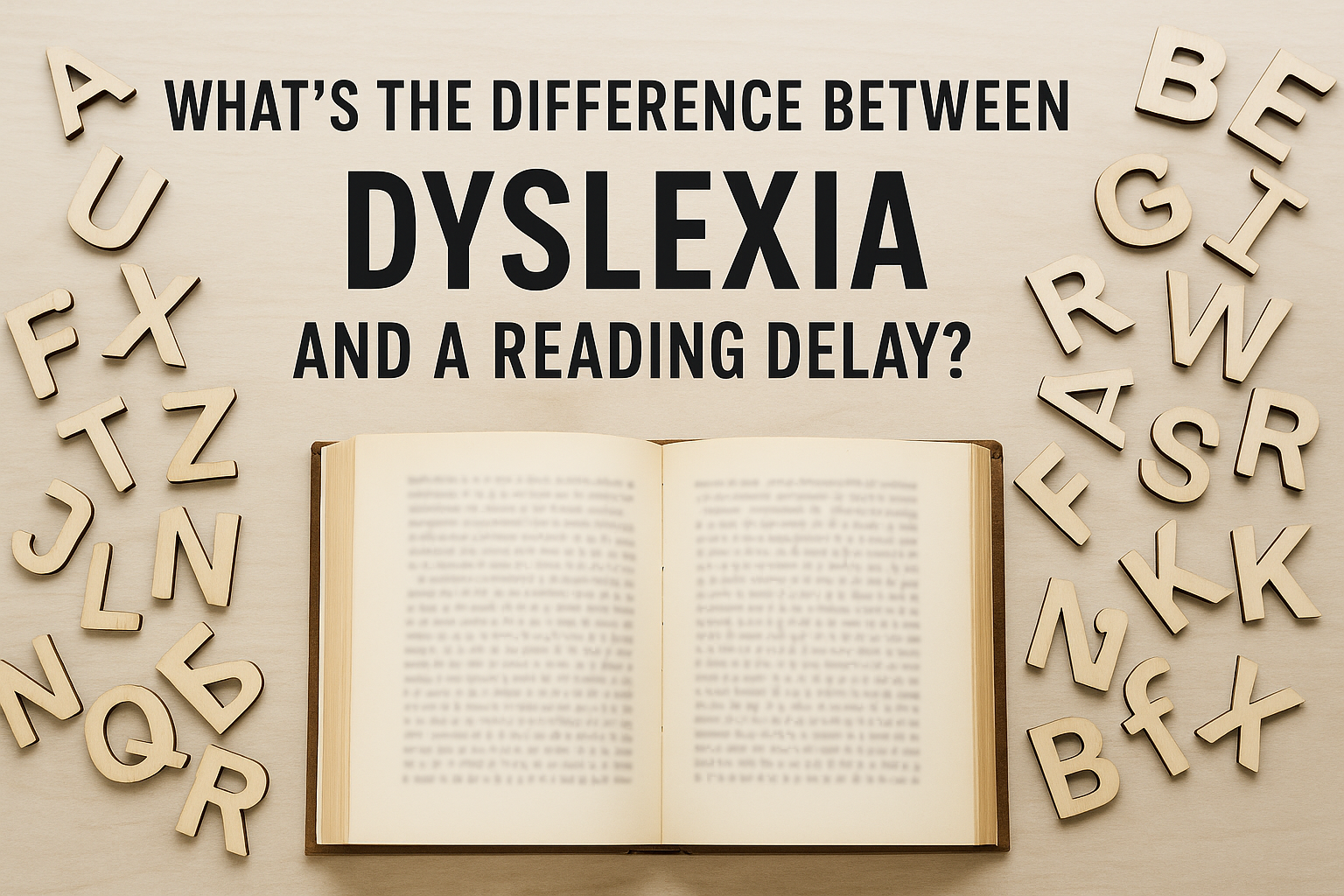
Helping Families Understand the Distinctions Behind the Diagnosis
If your child is struggling to read, you’re not alone—and asking the right questions early is a powerful step toward getting them the support they need. But for many families, the path forward can be confusing. You might hear terms like “reading delay” or “dyslexia” used interchangeably, even though they’re not the same thing. Understanding the difference is crucial—not just for accurate diagnosis, but for making sure your child receives the right kind of intervention.
Here’s a clear breakdown of what sets dyslexia apart from a general reading delay—and why it matters.
What Is a Reading Delay?
A reading delay refers to a lag in a child’s reading development compared to typical age-based expectations. This delay may be due to a variety of factors, such as:
-
Limited exposure to books or reading at home
-
Missed instruction due to illness, school transitions, or inconsistent teaching
-
Temporary developmental lags
-
Broader language delays
With the right instruction and support, many children with reading delays catch up to their peers over time. These students typically respond well to general reading interventions and do not show ongoing patterns of struggle once they’ve received help.
What Is Dyslexia?
Dyslexia, on the other hand, is a specific learning disability that is neurological in origin. It primarily affects the way the brain processes written language. Children with dyslexia have difficulty with:
-
Decoding words (sounding out)
-
Phonological awareness (hearing and manipulating sounds)
-
Spelling
-
Reading fluency
Dyslexia is not a reflection of intelligence or effort. In fact, many students with dyslexia are creative, verbal, and highly capable in other areas. Unlike a simple delay, dyslexia doesn’t resolve with time or general reading help—it requires structured, multisensory, evidence-based intervention, such as Orton-Gillingham or Wilson Reading System.
Why Accurate Diagnosis Matters
A child with dyslexia may be mistakenly labeled as having a general reading delay—and if that happens, they may receive the wrong kind of help. While a reading delay might be addressed with extra practice, dyslexia requires targeted intervention delivered by trained professionals. Without this, the gap can widen over time, affecting not just academics but also self-esteem and motivation.
Early identification and tailored support are essential.
How Can You Tell the Difference?
Only a comprehensive psychoeducational evaluation can definitively determine whether your child has dyslexia. That assessment, typically conducted by a school psychologist, neuropsychologist, or educational specialist, will include:
-
Tests of phonological processing
-
Decoding and fluency assessments
-
Cognitive evaluations
-
Academic achievement tests
If your child is in the early elementary years and not progressing as expected, don’t “wait and see.” The earlier the intervention, the better the outcome.
What Parents Can Do
-
Track your child’s progress. Pay attention to reading milestones. If something feels off, it probably is.
-
Ask questions at school. If your child is receiving reading support, ask what kind—and how they’re measuring progress.
-
Request an evaluation. If you suspect something more than a delay, don’t hesitate to ask for a formal assessment through your school or privately.
-
Get educated. Learn about evidence-based interventions and advocate for them if needed.
-
Support confidence. Celebrate your child’s strengths and remind them that struggling with reading does not mean they aren’t smart or capable.
Final Thoughts
Understanding the difference between dyslexia and a reading delay is more than semantics—it’s the key to getting your child what they need to thrive. With the right tools, support, and school environment, students with reading challenges can flourish academically and emotionally.
-
Dedicated to supporting families with children with learning differences.
© 2025 - 2026 • Learning Support Chicago • Questions? Email webmaster@learningsupportchicago.org
All Rights Reserved