First-Person Reflections That Educate and Inspire
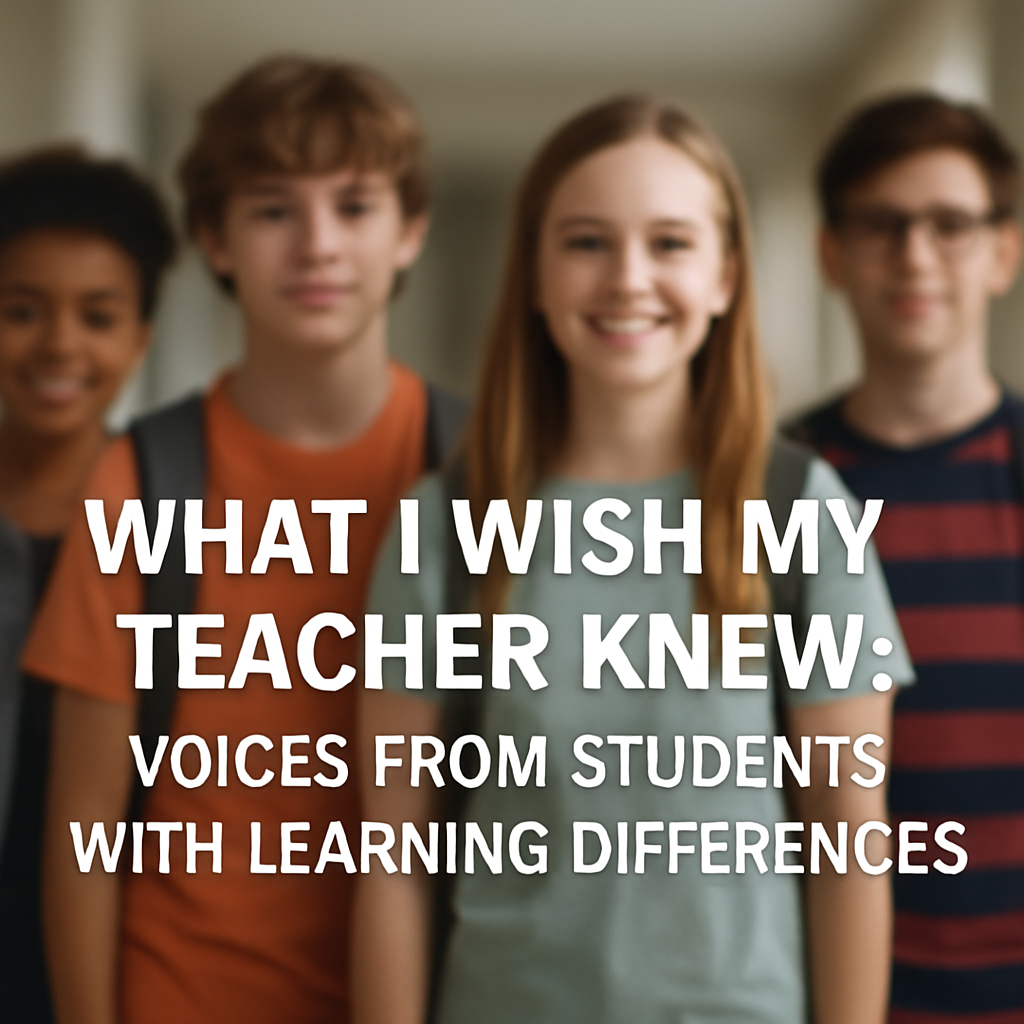
Students with learning differences often navigate a school system that isn’t built for how their brains work. Many find themselves misunderstood, underestimated, or left out of conversations about their own education. But they have a lot to say—and their voices deserve to be heard.
In this article, we share first-person reflections from students with learning differences, offering insight into what they wish their teachers understood. These aren’t just stories of struggle—they’re stories of resilience, brilliance, and the power of being seen.
“I’m not lazy—I’m exhausted from trying to keep up.”
“Every day I come to school, I try my hardest. But when I read, the letters move. When I write, it takes me three times as long. I’m not making excuses. I just wish you knew how hard I’m working just to stay at the starting line.”
—Zoe, age 14, dyslexia
Many students with learning differences are constantly pushing themselves, but the effort isn’t always visible. What looks like procrastination or apathy may actually be fatigue, frustration, or fear of failure.
“My brain just works differently—not worse.”
“I’m really good at coming up with ideas. I can think of five ways to solve a problem in math. But when I try to write it down, my brain gets stuck. I wish teachers would see what I can do before they judge what I can’t.”
—Elias, age 11, dysgraphia and ADHD
These students often excel in creativity, problem-solving, and verbal expression—but may struggle with written output or memorization. Strength-based teaching can make all the difference.
“Extra time doesn’t give me an advantage. It gives me a chance.”
“When I get extended time on a test, people say it’s not fair. But I need more time just to read the questions and understand them. Without it, I can’t show what I know.”
—Camille, age 16, dyslexia
Accommodations aren’t shortcuts. They’re tools that allow students to access the curriculum in a way that matches how they process information.
“Please don’t compare me to my classmates.”
“When I hear, ‘Well, your brother never had trouble with this,’ it makes me feel like I’m failing. I’m not my brother. I’m me. I’m doing the best I can.”
—Julian, age 13, executive function challenges
Comparisons can erode self-esteem. Celebrate each student’s growth based on their own starting point, not someone else’s finish line.
“Let me be part of the conversation about my learning.”
“Sometimes people talk about my IEP in front of me like I’m not there. I want to be asked what helps me. I want to learn how to speak up for myself.”
—Nina, age 12, language processing disorder
Self-advocacy is a life skill. Including students in conversations about their learning builds confidence and ownership.
Final Thoughts from the Students:
-
“I wish my teacher knew I want to succeed just as much as everyone else.”
-
“Please talk to me with kindness, not frustration.”
-
“Thank you to the teachers who took time to learn how I learn.”
What Educators Can Do
-
Listen first. Ask students what’s working and what isn’t.
-
Focus on strengths. Build instruction around what a student can do.
-
Use inclusive practices. UDL, flexible seating, and multimodal assignments benefit everyone.
-
Check your assumptions. Learning differences don’t mean less intelligence or effort.
-
Empower students. Teach them to understand their learning profile and advocate for themselves.
Students with learning differences are not broken. They don’t need fixing—they need understanding, support, and opportunity. When teachers make space to listen, they often discover a student who is not only capable—but exceptional.