What Parents Need to Know, Ask, and Bring
Finding the right school for a child with a learning difference is more than an academic decision—it’s about finding a community where your child will be supported, challenged, and understood. With so many educational options available, it’s important to approach the search with clarity and confidence. Whether your child has dyslexia, ADHD, executive functioning challenges, or another diagnosed learning difference, here’s what you need to know to make the best choice for your family.
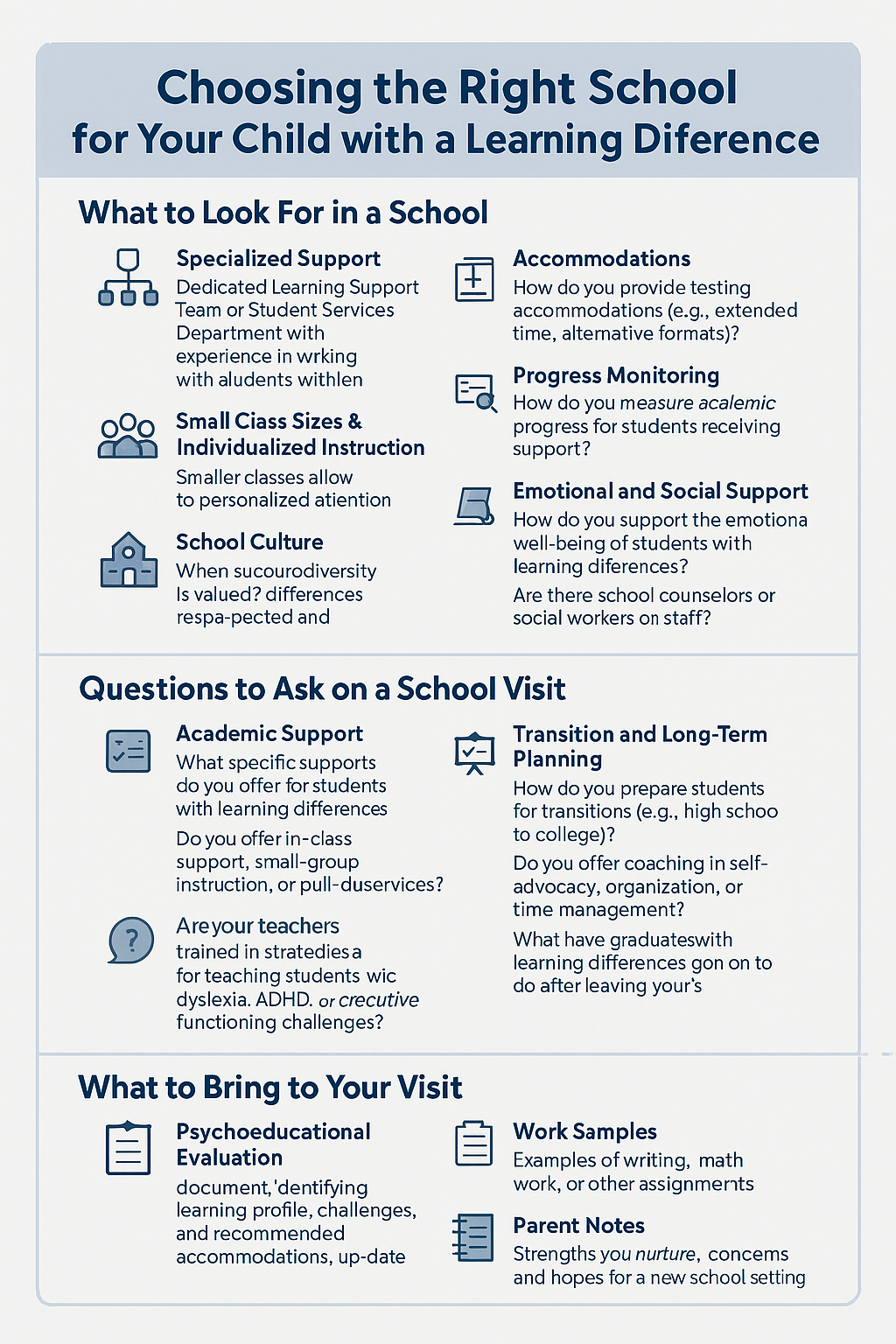
What to Look For in a School
Every child learns differently, and the right school will recognize and honor that truth. As you evaluate your options, focus on the following key indicators:
1. Specialized Support
Look for schools with a dedicated Learning Support Team or Student Services Department. These professionals should have experience working with students with learning differences and a range of tools to meet individual needs.
2. Small Class Sizes & Individualized Instruction
Smaller classes allow for more personalized attention. Ask how teachers differentiate instruction and accommodate different learning styles.
3. School Culture
Are differences respected and normalized? A strong, inclusive culture will build your child’s confidence and sense of belonging.
4. Teacher Training
Educators should be trained in evidence-based methods like Orton-Gillingham, Universal Design for Learning, or executive functioning strategies. Ask how teachers stay current on best practices.
5. Communication & Collaboration
Schools should actively partner with parents, provide regular progress updates, and be open to feedback. Look for a school that sees you as part of your child’s success team.
Questions to Ask on a School Visit
Bring these questions with you during school tours or admissions meetings to better understand how each school might support your child:
Academic Support
-
What specific supports do you offer for students with learning differences?
-
Do you offer in-class support, small-group instruction, or pull-out services?
-
Are your teachers trained in strategies for teaching students with dyslexia, ADHD, or executive functioning challenges?
Accommodations
-
How do you provide testing accommodations (e.g., extended time, alternative formats)?
-
What assistive technology is available?
-
How are accommodations implemented and monitored?
Progress Monitoring
-
How do you measure academic progress for students receiving support?
-
Will I receive regular updates on how my child is doing?
-
Is there a point person I can contact if I have concerns?
Emotional and Social Support
-
How do you support the emotional well-being of students with learning differences?
-
Are there school counselors or social workers on staff?
-
How do you address bullying or exclusion?
Transition and Long-Term Planning
-
How do you prepare students for transitions (e.g., high school to college)?
-
Do you offer coaching in self-advocacy, organization, or time management?
-
What have graduates with learning differences gone on to do after leaving your school?
What to Bring to Your Visit
To get the most helpful feedback and ensure the school can assess fit, prepare the following documents in advance:
1. Psychoeducational Evaluation
-
This document identifies your child’s learning profile, areas of challenge, and recommended accommodations. Most schools require it to understand your child’s needs.
-
Make sure it’s up-to-date (within the past 2–3 years).
2. IEP or 504 Plan
(if applicable)
-
These documents outline your child’s current accommodations and services. They give schools insight into what has worked (or hasn’t worked) in past settings.
3. Recent Report Cards or Progress Reports
-
Academic performance over time helps schools understand your child’s trajectory.
4. Work Samples
-
Examples of your child’s writing, math work, or other assignments can offer important context.
5. Parent Notes
-
Come prepared with your own notes: strengths you want nurtured, concerns you have, and what you’re hoping for in a new school setting.
Final Advice
Choosing a school is not about finding the “perfect” place—it’s about finding the right fit. Pay attention to how school staff speak about students with learning differences. Do they focus on deficits or strengths? Are they listening as much as they are talking? The way a school engages with you during this process says a lot about how they will engage with your child.
Don’t be afraid to ask direct questions or request follow-up conversations. This is one of the most important decisions you’ll make for your child—and you deserve clarity.
For families in the Chicagoland area exploring private school options, Hyde Park Day School (elementary and middle school) and Wolcott College Prep (high school) are two highly regarded choices for students with learning differences. While tuition can be significant, both schools offer comprehensive, well-rated programs tailored to support diverse learners.
If you’re considering a public school route, start by contacting your local district to learn what services and supports are available for students with learning differences. Public schools are required to provide accommodations under federal law, but the quality and scope of services can vary by district.