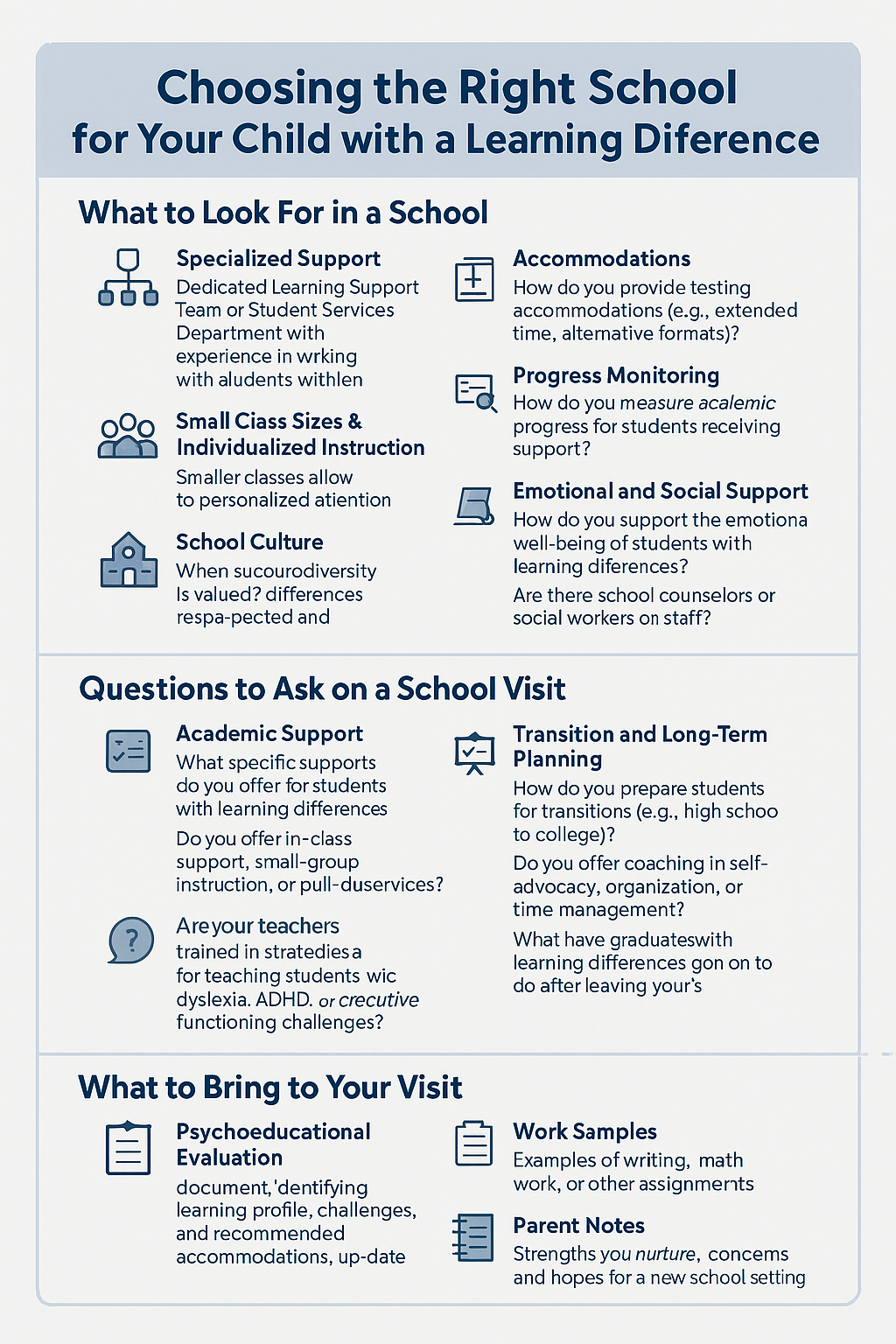

For families raising children with learning differences, it’s important to understand that tutoring—while sometimes helpful—is not a substitute for the right school placement. Tutoring can be expensive, and it often cannot replicate the comprehensive services, accommodations, and specialized instruction that a school designed for students with learning differences can provide. In fact, many students enrolled in schools that specialize in supporting diverse learners do not need outside tutoring at all, because the school itself provides the interventions and strategies required for academic growth.
That said, when used appropriately, the right tutoring service can still be a powerful tool. It can build confidence, close academic gaps, and equip a child with tools for long-term success—not just in school, but in life. But with countless tutoring options available, how do you know which one is right for your child?
Here’s what you need to know, what questions to ask, and what red flags to avoid.
1. Start with Your Child’s Unique Learning Profile
Before you begin your search, take time to understand (or revisit) your child’s learning strengths and challenges. Review any existing documentation:
-
Neuropsychological evaluations
-
IEPs or 504 plans
-
Teacher reports or progress summaries
These documents can help clarify whether your child struggles with executive functioning, language processing, dyslexia, ADHD, or other challenges. A good tutor will want this information—and should know how to interpret it.
Pro Tip: Don’t work with a service that glosses over your child’s diagnosis or says it doesn’t matter. It matters.
2. Look for Specialized Expertise
Not all tutors are equipped to support students with learning differences. Ask potential providers:
-
Do your tutors have training in special education or learning disabilities?
-
Are they familiar with Orton-Gillingham, Wilson, or other structured literacy programs?
-
How do they tailor sessions for kids with ADHD or executive functioning challenges?
-
Will my child have the same tutor each session?
Ideally, you’re looking for someone who brings both subject-matter expertise and an understanding of how your child learns best.
3. Prioritize Relationship and Fit
Tutoring isn’t just academic—it’s relational. Students need to feel safe, understood, and encouraged. This is especially true for students who’ve experienced repeated frustration in school.
Ask:
-
Will we have an introductory session to see if the tutor and student connect?
-
How do you handle situations where a student is discouraged or resistant?
Watch how the tutor interacts with your child. You’re not just hiring a teacher—you’re bringing in a mentor and cheerleader.
4. Expect Goal Setting and Progress Tracking
A quality tutoring service should develop clear, measurable goals and communicate progress regularly. Vague reassurances like “things are going well” aren’t enough.
Ask:
-
What goals will we set in the first few sessions?
-
How do you track and communicate progress?
-
How do you coordinate with my child’s school or teachers?
Look for transparency. You deserve regular updates and clarity about what’s working—and what’s not.
5. Ask About Scheduling, Flexibility, and Cost
Logistics matter. Consider:
-
How many sessions per week are recommended?
-
Is there a consistent schedule or flexibility built in?
-
What’s the cancellation policy?
-
Are there options for in-person, virtual, or hybrid sessions?
-
What are the hourly rates, and do they vary based on the tutor’s experience?
Some services may offer packages or financial assistance—ask.
6. Red Flags to Watch Out For
-
Promises of rapid transformation (“Your child will be reading at grade level in 4 weeks!”)
-
No assessment process before starting
-
Lack of training in learning differences
-
High tutor turnover or inconsistency in staffing
-
Poor communication with families
Final Thought: Trust Your Instincts
You know your child better than anyone. If something feels off—push back or move on. The right tutoring relationship will feel collaborative, respectful, and hopeful.
What to Bring to a Consultation:
-
Neuropsychological or psychoeducational evaluations
-
IEP/504 documentation (if applicable)
-
Report cards or teacher notes
-
A list of specific concerns or goals
-
Your child, if possible, to observe rapport and interaction
Choosing the right tutor isn’t just about boosting grades—it’s about helping your child feel capable, confident, and empowered. With the right support, students with learning differences can thrive not in spite of their challenges, but because of their strengths.