Private schools are often seen as desirable alternatives to public education—offering smaller class sizes, specialized programs, and enriched curricula. However, when it comes to serving students with learning differences such as dyslexia, ADHD, dysgraphia, and executive functioning challenges, many private schools are not equipped to meet those students’ needs effectively. This gap can leave families with few options and students without the necessary supports to thrive.
Lack of Legal Mandates
Unlike public schools, private schools are not bound by the Individuals with Disabilities Education Act (IDEA). This federal law requires public schools to provide a free and appropriate education to students with disabilities, including the development of Individualized Education Programs (IEPs) and access to specialized services. Most private schools are exempt from these requirements, which means that students with learning differences may not receive formal accommodations or legally protected support plans.
Limited Specialized Staff and Training
Many private schools do not have on-site learning specialists, special education teachers, or school psychologists trained in learning differences. While some schools may offer basic academic support or tutoring, they often lack the infrastructure and expertise to deliver targeted interventions like Orton-Gillingham instruction for dyslexia or executive functioning coaching for ADHD. Teachers may also receive limited professional development in recognizing and responding to diverse learning needs.
Curriculum Inflexibility
Because private schools are not required to adhere to state or federal special education standards, their curricula may not be designed with neurodiverse learners in mind. Students who need differentiated instruction, extra time on assignments, or alternative assessments may struggle in rigid academic environments that emphasize pace, performance, and conformity over personalized support.
Accessibility and Inclusion Gaps
Even in well-intentioned private schools, inclusivity efforts may fall short. Learning differences can be stigmatized or misunderstood, particularly in academically competitive settings where students are expected to meet uniform benchmarks. Without strong policies or inclusive practices, students with learning differences may experience isolation, low self-esteem, or academic failure.
Financial Barriers to External Support
Some private schools recommend that families seek outside support—such as private tutoring, therapists, or educational evaluations—to fill gaps in service. These services, while valuable, often come at a significant financial cost and can place an additional burden on families who are already paying high tuition fees.
Notable Exceptions
There are private schools that specialize in serving students with learning differences, such as those with full-time learning support teams, customized curricula, and expertise in special education. However, these schools are relatively few in number and often have long waitlists or high tuition, making them inaccessible to many families.
What Families Should Consider
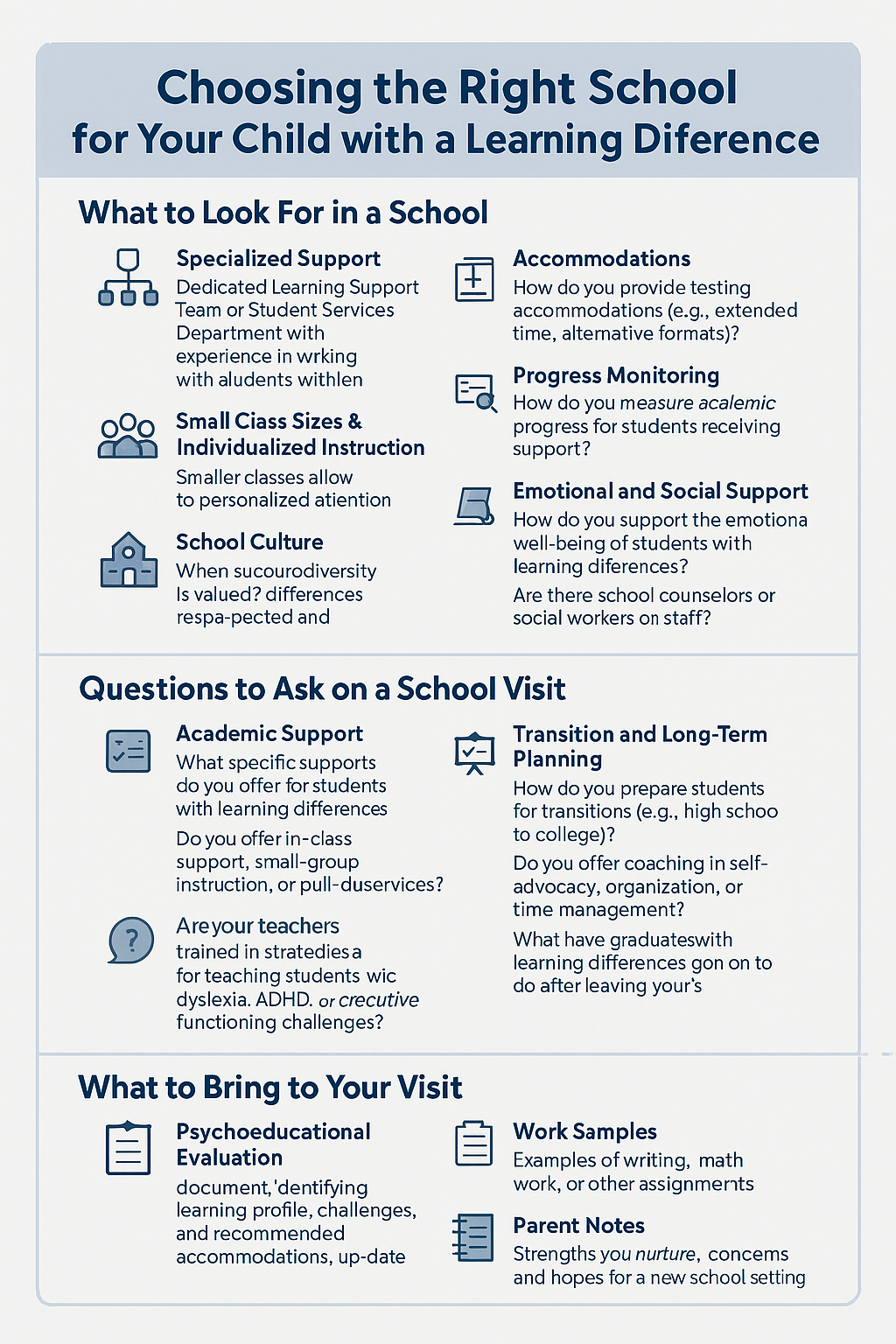
Before enrolling a child with learning differences in a private school, families should ask:
-
What types of academic accommodations are available?
-
Are there certified learning specialists on staff?
-
How does the school support students with ADHD, dyslexia, or other challenges?
-
Is the school willing to collaborate with outside providers?
-
Are faculty trained in differentiated instruction?
Conclusion
Private schools can offer enriching academic experiences, but many are not structured to meet the needs of students with learning differences. As awareness grows, some are beginning to expand their support systems—but for now, parents must do thorough research and advocacy to ensure their child will receive the services and understanding they deserve.